

Four Months Until High School & Prep Seasons: Are You Putting In the Work?

Updated: Oct 13
With 126 days remaining until the high school hockey season, players still have time to make meaningful improvements. However, that improvement will not come from simply showing up when the season begins.
A productive offseason should include a balanced mix of:
Quality on-ice training
Strength training in the gym
Speed, agility, and plyometric work
Players who consistently address all three areas give themselves the best opportunity to return stronger, faster, more skilled, and better prepared for the demands of high school hockey.
Quality On-Ice Training
On-ice development should include the right combination of:
Competitive club games
Structured team practices
Targeted skill-development sessions
Each serves a different purpose.
Games help players compete, read pressure, and make decisions in unpredictable situations.
Practices reinforce positioning, communication, team concepts, and good habits.
Targeted skill sessions provide the instruction, correction, and repetition needed to improve skating, puck control, passing, shooting, and individual weaknesses.
Players need all three—but simply adding more games does not automatically produce more development.
There is often an argument that any extra ice is beneficial because it provides more puck touches. However, there is an important opportunity cost to consider. Players have limited time, energy, recovery capacity, and training resources.
Time spent playing additional games on a lower-level club league team or town midget programs is time that could have been spent in more quality development endeavors, such as: practice, targeted skill sessions, strength workouts, or more competitive on-ice environment. The goal should not simply be to get more touches. It should be to get the right touches.


A player may score frequently and control the puck for long stretches against weaker competition, but those touches may occur without meaningful pressure. The player may have extra time to skate through opponents, hold onto the puck, delay decisions, and attempt plays that will not work against stronger high school players.
Quality competition forces players to:
Make faster decisions
Move the puck before pressure arrives
Protect the puck in tighter areas
Skate with greater urgency
Compete harder for possession
Execute skills at game speed
Good competition exposes weaknesses and demands improvement. Watered-down competition can hide those weaknesses.
Strength Training in the Gym
At 126 days out, players should already be strength training consistently.
Players who have not started should not continue waiting. They need to get into the gym now and begin building the physical foundation required for the upcoming season.
A well-designed strength program should focus on:
Lower-body strength
Single-leg strength and stability
Core strength
Hip and groin durability
Upper-body strength
Proper movement technique
Strength helps players skate more powerfully, protect the puck, win battles, absorb contact, and remain effective throughout a game.
The goal is not simply to lift the heaviest possible weight. Players should train with proper form, follow an age-appropriate program, and build gradually.
Kick your preseason into high gear!
Fusion Hockey Summer Preseason Mini-Camp
Work On Your Game and Show Up Better This Season!
Aug 17-21 I The Edge, Bedford, MA I Ages 11-18
Plyometrics, Speed and Explosiveness
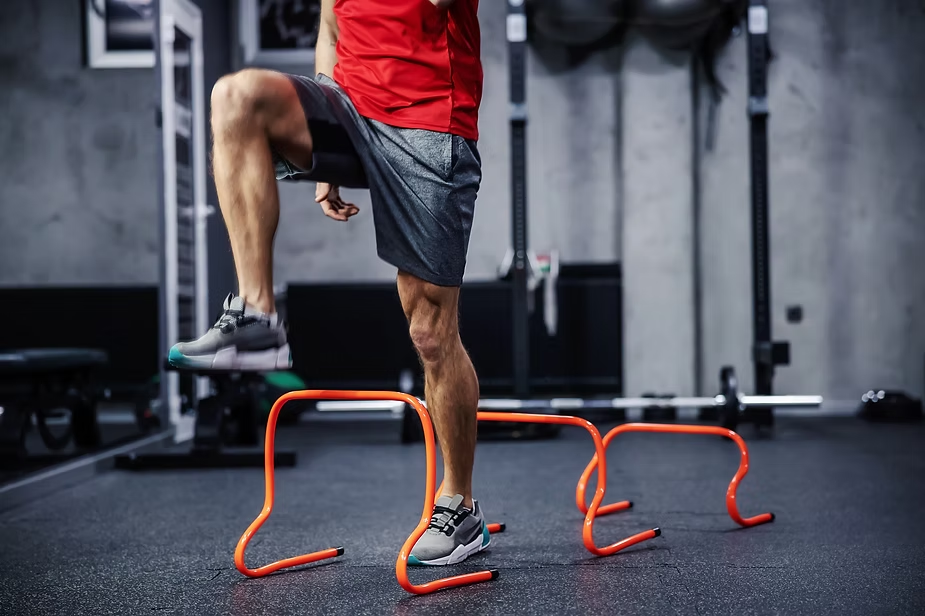
Players should also be working on plyometrics. Plyometric training includes explosive movements such as jumping, bounding, hopping, landing, and short bursts of acceleration. When performed correctly, this training helps players become quicker and more powerful.
Useful areas of focus include:
First-step quickness
Acceleration
Lateral explosiveness
Single-leg power
Balance and body control
Safe jumping and landing mechanics
Short, high-intensity sprints
Hockey is an explosive sport. Players repeatedly stop, start, change direction, battle, and accelerate. Strength is important, but players must also learn to apply that strength quickly. Plyometric work should be purposeful and properly coached. More jumping is not always better. Quality movement, safe landings, and adequate recovery are essential.
The Reality of Offseason Development
Players who have not consistently trained on the ice, worked in the gym, and developed their speed and explosiveness cannot realistically expect to make a major jump simply because a new season is beginning.
Improvement requires more than attending tryouts with fresh equipment and hoping to earn a larger role.
Players who want to return better must put in the work before the season:
Improve their individual skills
Challenge themselves against quality competition
Build strength
Develop speed and explosiveness
Arrive properly conditioned
There are no guarantees in hockey, but players who consistently train in all three areas give themselves a much stronger chance to improve, compete, and earn greater opportunities.
Successful Teams Need Full Offseason Buy-In
The best high school teams are rarely built by only a few committed players.
Successful teams have buy-in throughout the roster. Players understand that offseason preparation is not only about individual improvement—it is also a responsibility to their teammates.
When most of the team trains consistently, everyone returns:
Better conditioned
More physically prepared
More confident
More competitive
Ready to practice at a higher pace
That collective preparation raises the standard for the entire program. A team cannot reach its full potential when only a small group of players puts in the offseason work while everyone else waits for the season to begin.
Great teams are built when all players take responsibility for their own development and arrive ready to contribute from the first day of the season.


Comments